Understanding Climate Zone 2A and Savannah's Unique Humidity Challenge
Savannah sits squarely in Climate Zone 2A, a classification that brings specific environmental pressures most homeowners don't fully appreciate. This zone is characterized by hot, humid summers and mild winters, with annual humidity levels that frequently exceed 70 percent. Unlike drier climates where traditional insulation materials perform predictably, the moisture-laden air in Savannah creates unique challenges that directly impact how insulation must be installed and maintained.
The problem isn't just discomfort. High humidity in Climate Zone 2A accelerates wood rot, promotes mold growth, and degrades conventional fiberglass and cellulose insulation far faster than in other regions. When moisture penetrates standard insulation materials, they lose R-value, compress, and become breeding grounds for mold and mildew. This is why many homeowners in our area discover that their insulation has failed long before its expected lifespan ends. The solution lies in understanding how different insulation types respond to our specific climate and choosing materials that actively resist moisture rather than absorb it.
Why Spray Foam Insulation Outperforms Traditional Materials in High-Humidity Areas
Closed Cell Spray Foam Insulation performs exceptionally well in Climate Zone 2A because of its fundamental material properties. Unlike fiberglass batts or blown cellulose, spray foam creates a continuous air seal that actively resists moisture infiltration. The closed-cell structure contains millions of tiny pockets filled with low-conductivity gas, and critically, these cells are sealed from one another. This design means that even when humidity levels spike, moisture cannot travel through the foam matrix the way it would through traditional insulation.
The vapor barrier properties of closed-cell foam are particularly valuable in Savannah's climate. When spray foam is applied correctly, it essentially becomes part of your home's moisture management system. It doesn't just insulate; it prevents warm, humid outside air from reaching cooler interior surfaces where condensation forms. This dual function makes spray foam especially effective in crawl spaces and attics, where moisture accumulation is most problematic. Homeowners who switch from traditional insulation to spray foam often report noticeably drier crawl spaces within weeks, even during our most humid months.
Crawl Space Insulation and Pier and Beam Homes: A Savannah-Specific Problem
Many homes in Savannah and surrounding areas like Pooler were built on pier and beam foundations, a construction method that leaves the underside of the home exposed to outdoor air. This architectural style, while charming and practical in many ways, creates a significant insulation challenge in our humid climate. The crawl space becomes a direct pathway for hot, humid air to enter the home, and traditional crawl space insulation methods often fail to adequately seal these gaps.
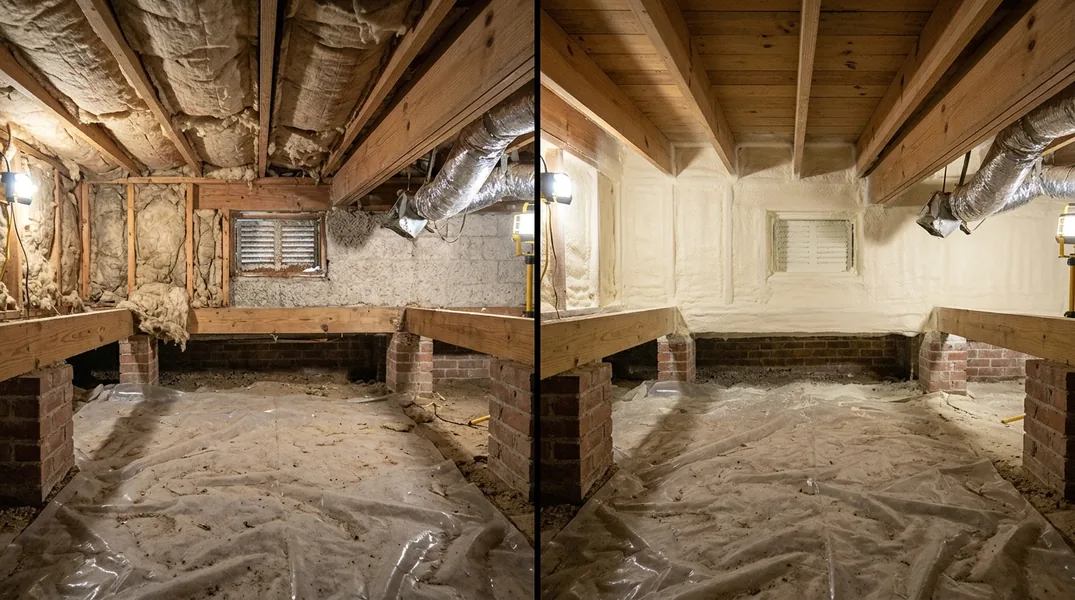
The best insulation for crawl space applications in Climate Zone 2A is spray foam, specifically when applied as a complete encapsulation system. Rather than insulating just the rim joist or floor joists, professional contractors apply Closed Cell Spray Foam Insulation to the interior crawl space walls, creating a conditioned buffer zone. This approach dramatically improves energy efficiency and, equally important, eliminates the moisture problems that plague traditional crawl space spray foam installations that don't fully address air sealing. Homeowners report warmer floors in winter, cooler homes in summer, and significantly lower humidity levels year-round.
Cold Floors and Moisture: How Spray Foam Solves Both Problems
One of the most common complaints from homeowners with pier and beam foundations is cold floors, particularly during winter months. Many assume the problem is simply lack of insulation, but in Savannah's climate, the real culprit is often air infiltration combined with moisture accumulation. When cold, humid air moves through an inadequately sealed crawl space, it cools the floor above while simultaneously depositing moisture that promotes mold and structural damage. Traditional cold floors insulation solutions that rely on fiberglass batts fail because they don't address the air movement component of the problem.
Spray foam eliminates cold floors by addressing both thermal resistance and air sealing simultaneously. When applied to crawl space walls and rim joists, it creates a thermal barrier that prevents cold air from entering while the foam's inherent vapor resistance prevents humid air from condensing on cold surfaces. The result is noticeably warmer floors and a drier crawl space. This is particularly important in Climate Zone 2A, where the temperature differential between inside and outside air creates condensation risk throughout much of the year. Many homeowners are surprised to discover that their cold floor problem was actually a symptom of poor air sealing and moisture accumulation, not insufficient R-value.
Attic Spray Foam Insulation in Savannah's Climate: Moisture Control Above
Attic Spray Foam Insulation serves a different but equally important function in our humid climate. While crawl spaces present moisture challenges from below, attics face them from above and from within. In Climate Zone 2A, attic moisture typically comes from two sources: outdoor humidity that infiltrates through poor ventilation and air sealing, and indoor moisture that rises from the living spaces below. Traditional attic insulation does nothing to address either problem, which is why many Savannah homes develop attic mold, wood rot, and premature roof deterioration.
Closed Cell Spray Foam Insulation applied to attic roof decking creates a conditioned attic space that dramatically reduces moisture problems. By sealing air leaks and providing vapor resistance, spray foam prevents warm, humid air from reaching the cold roof surface where condensation forms. This approach is particularly effective in our region because it works with our climate rather than against it. Homeowners who invest in professional attic spray foam installation report lower energy bills, elimination of attic mold problems, and improved comfort throughout their homes. The initial investment pays dividends through reduced cooling costs and extended roof life.
Getting Professional Spray Foam Installation: What Savannah Homeowners Need to Know
Spray foam insulation is not a DIY project, and this is especially true in Climate Zone 2A where moisture management is critical. Professional installation requires specialized equipment, proper safety protocols, and deep understanding of how spray foam behaves in humid climates. When you choose a contractor for crawl space or attic work, verify that they understand the specific challenges of Savannah's humidity and have experience with pier and beam foundations and similar moisture-prone applications.
The best approach is to request a free estimate from a local contractor who can assess your specific situation. Savannah Spray Foam Insulation offers comprehensive evaluations of crawl spaces, attics, and other areas where moisture and energy efficiency are concerns. During an inspection, a professional can identify air leaks, moisture problems, and recommend whether Closed Cell Spray Foam Insulation or Open Cell Spray Foam Insulation is most appropriate for your home. Call (912) 483-1976 today to schedule your evaluation and take the first step toward a more comfortable, moisture-resistant home that truly works with Savannah's climate rather than fighting it.
Looking for a professional spray foam insulation contractor in Savannah? Savannah Spray Foam Insulation responds fast for all your spray foam insulation needs.
Get a Free Quote