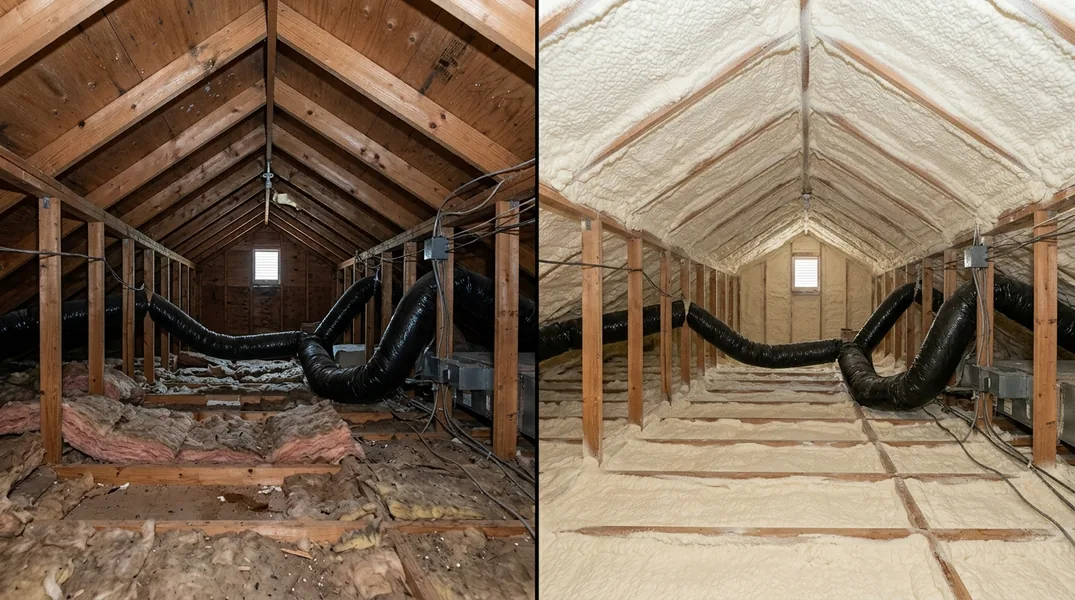
Understanding Spray Foam Insulation Types
When it comes to insulating your attic, attic spray foam insulation has become one of the most effective solutions available to homeowners in Savannah. However, not all spray foam is created equal. The two primary types, open cell and closed cell, offer distinctly different benefits and characteristics that can significantly impact your home's energy efficiency, comfort, and long-term performance.
Understanding the differences between these two options is crucial before making an investment in your home's insulation. Each type has unique properties related to density, moisture resistance, air sealing capability, and cost. Your choice will depend on your specific attic conditions, climate considerations, and budget. In Savannah's humid subtropical climate, where moisture management and heat control are paramount, selecting the right spray foam type can make a substantial difference in your home's performance year-round.
What Is Open Cell Spray Foam Insulation?
Open Cell Spray Foam Insulation is a lighter, more flexible material that contains cells that are not completely closed. This structure allows air and moisture to pass through the foam, which has both advantages and considerations. Open cell foam typically has a density of around 0.5 pounds per cubic foot, making it softer and easier to cut or modify after installation. The material expands significantly during application, filling gaps and crevices effectively to create an excellent air barrier.
One of the primary benefits of open cell spray foam is its sound-dampening properties. The porous structure absorbs sound waves, making it an excellent choice if you want to reduce noise transmission through your attic. Additionally, open cell foam is generally more affordable than closed cell alternatives, which makes it attractive for budget-conscious homeowners. However, because it allows moisture to pass through, open cell foam is not ideal for areas where water intrusion is a concern. In humid climates, it's important to ensure proper ventilation or consider pairing it with a vapor barrier to prevent moisture accumulation within the foam itself.
What Is Closed Cell Spray Foam Insulation?
Closed Cell Spray Foam Insulation is a denser material with cells that are completely closed off from one another. This structure creates a more rigid, moisture-resistant barrier with a density typically ranging from 1.5 to 2 pounds per cubic foot. The closed cell structure means the foam is impermeable to air and water vapor, making it an exceptional choice for creating a sealed attic insulation system that provides both thermal and moisture protection.
The superior moisture resistance of closed cell foam makes it particularly valuable in humid environments like Savannah, where moisture control is essential for preventing mold growth, wood rot, and structural damage. Closed cell foam also provides a higher R-value per inch of thickness compared to open cell, meaning you achieve better insulation performance with less material. Additionally, closed cell spray foam adds structural rigidity to your attic, which can help reinforce roof decking and provide additional stability. The primary trade-off is cost: closed cell foam typically costs more than open cell alternatives. However, many homeowners find the enhanced performance and durability justify the investment, especially when considering long-term energy savings and protection against moisture-related damage.
Sealed Attic Insulation: Benefits for Savannah Homes
Creating an unvented attic spray foam system through spray foam application offers significant advantages for homeowners seeking maximum energy efficiency and comfort. When your attic is properly sealed with spray foam, you eliminate the air leaks that typically account for substantial energy loss. This means your HVAC system doesn't have to work as hard to maintain consistent temperatures throughout your home, resulting in lower utility bills and reduced strain on your equipment.
Beyond energy efficiency, a sealed attic provides superior moisture control, which is particularly important in Savannah's humid climate. Traditional ventilated attics can allow humid air to enter, creating an environment where moisture accumulates and promotes mold growth and wood deterioration. By sealing your attic with spray foam, you create a controlled environment where humidity levels remain stable and moisture-related problems are significantly reduced. This approach also improves indoor air quality by preventing pollutants and allergens from entering through attic spaces. Homeowners often report improved comfort levels, more consistent room temperatures, and fewer issues with musty odors or moisture-related damage when they upgrade to a sealed attic system.
Attic Spray Foam Insulation Cost in Savannah: What to Budget
Understanding the financial investment required for spray foam attic insulation is an important part of your decision-making process. The pricing for spray foam insulation varies based on several factors, including the type of foam selected, the size of your attic space, current insulation conditions, and accessibility. Open cell spray foam generally costs between $0.50 and $1.00 per board foot, while closed cell foam typically ranges from $1.00 to $2.00 per board foot or more. For a typical attic project in Savannah, you might expect to invest anywhere from $1,500 to $5,000 or more, depending on these variables.
While the upfront cost of spray foam insulation is higher than traditional fiberglass or cellulose insulation, the long-term value proposition is compelling. Homeowners typically recoup their investment through energy savings within 3 to 5 years, and the benefits continue for decades. Spray foam insulation lasts the lifetime of your home, requires no maintenance or replacement, and provides superior performance compared to traditional materials. Additionally, many homeowners find that the improved comfort, better moisture control, and potential increase in home value make the investment worthwhile. To get an accurate free estimate tailored to your specific attic, we recommend contacting Savannah Spray Foam Insulation at (912) 483-1976 for a professional assessment.
Choosing the Right Spray Foam for Your Savannah Attic
Selecting between open cell and closed cell spray foam ultimately depends on your specific needs, climate conditions, and budget. If moisture management is a primary concern, or if you're looking for maximum R-value performance, closed cell foam is typically the better choice despite its higher cost. Closed cell's superior moisture resistance and structural benefits make it ideal for Savannah's humid climate and for homeowners who want the most comprehensive protection. Conversely, if budget is your primary constraint and your attic has good ventilation or lower moisture risk, open cell foam can still provide excellent insulation and air sealing benefits at a more affordable price point.
The best way to determine which option is right for your home is to have a professional evaluation. Every attic is unique, with different structural conditions, ventilation systems, moisture profiles, and performance goals. A qualified spray foam contractor can assess your specific situation, consider your climate zone, evaluate your budget, and recommend the most appropriate solution. Savannah Spray Foam Insulation specializes in helping homeowners make informed decisions about their attic insulation needs. Whether you're interested in open cell, closed cell, or exploring other options like Wall & Injection Foam Insulation, our team is ready to provide expert guidance. Contact us today at (912) 483-1976 or visit our website to schedule your free estimate and take the first step toward a more efficient, comfortable home.
Looking for a professional spray foam insulation contractor in Savannah? Savannah Spray Foam Insulation responds fast for all your spray foam insulation needs.
Get a Free Quote