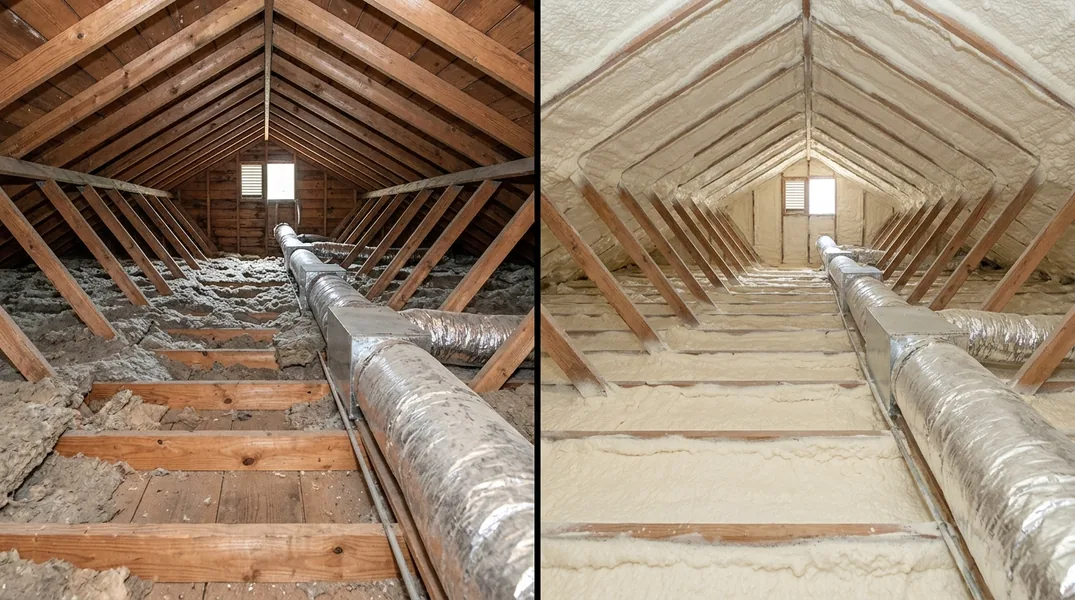
Why Historic Homes in Savannah Need Special Insulation Solutions
Savannah's historic district is a treasure trove of architectural beauty, but many of these century-old homes present unique challenges when it comes to energy efficiency and climate control. The crawl spaces beneath Victorian, Colonial, and early 20th-century homes were often built with minimal insulation or moisture barriers, leaving modern homeowners struggling with high utility bills, humidity problems, and uneven temperatures throughout their homes.
The irregular construction methods used in older homes mean that traditional fiberglass batts simply don't fit properly in many crawl spaces. Gaps, voids, and oddly-shaped cavities are common in historic properties, and these air leaks can account for significant energy loss. This is where Attic Spray Foam Insulation becomes an attractive solution for homeowners seeking comprehensive coverage and superior thermal performance in their century-old properties.
Is Spray Foam Insulation Worth It for Your Historic Crawl Space?
When evaluating whether spray foam is worth the investment, it's important to consider both the immediate and long-term benefits. For homeowners with historic crawl spaces in Savannah, the answer is often yes. Spray foam provides an air-tight seal that traditional insulation cannot match, reducing energy consumption by 15 to 20 percent in many cases. This translates to lower heating and cooling costs year-round, which can offset the initial investment within 5 to 8 years for most homeowners.
Beyond energy savings, spray foam offers moisture control benefits that are particularly valuable in humid climates like coastal Georgia. Historic crawl spaces are prone to moisture intrusion, which can lead to mold growth, wood rot, and structural damage. Closed Cell Spray Foam Insulation acts as both an insulator and a moisture barrier, protecting your home's structural integrity while improving indoor air quality. For homes with aging foundations and exposed wood beams, this dual benefit makes spray foam a worthwhile investment that extends the lifespan of your home's most vulnerable components.
Is Spray Foam Insulation Safe? Understanding Health and Safety Concerns
Safety is a legitimate concern for any homeowner considering spray foam insulation, and it deserves a thorough, honest answer. When properly installed by qualified professionals, spray foam insulation is safe for your home and family. The key phrase here is 'properly installed.' The installation process requires careful attention to ventilation, protective equipment, and application techniques to ensure that no harmful chemicals remain in your living spaces after the foam has cured.
Professional contractors like Savannah Spray Foam Insulation follow strict industry standards and safety protocols during installation. The spray foam application process involves two chemical components that react together to form the foam. During the spraying and curing process, which typically takes 24 to 48 hours, it's important to keep the area well-ventilated and to follow the contractor's post-installation instructions. Once fully cured, closed-cell spray foam becomes an inert plastic material that poses no health risk to occupants. The foam does not break down, does not release particles into the air, and does not off-gas in any meaningful way after the initial curing period has passed.
Spray Foam Off-Gassing: What Happens After Installation
Off-gassing is one of the most misunderstood aspects of spray foam insulation. Many homeowners worry that their homes will smell chemical-like for months after installation or that harmful vapors will linger in their crawl spaces indefinitely. The reality is more nuanced. During the initial curing phase, which lasts approximately 24 to 48 hours, spray foam does release volatile organic compounds (VOCs) as the two chemical components react and polymerize. This is why proper ventilation during and immediately after installation is critical, and why professional installers take precautions to minimize exposure.
However, once the foam has fully cured, off-gassing essentially stops. The chemical reaction is complete, and the material becomes a stable plastic polymer. Any residual odor typically dissipates within a few days to a week, especially if the crawl space is properly ventilated. This is vastly different from the months-long off-gassing period that some homeowners fear. For peace of mind, ask your contractor about their ventilation protocols and post-installation timeline. Reputable companies like Savannah Spray Foam Insulation will provide clear guidance on when it's safe to return to normal activities in your home and how to maintain proper air circulation during the curing process.
Spray Foam Insulation Pros and Cons: A Balanced Look at Your Options
Like any home improvement solution, spray foam insulation comes with both significant advantages and some limitations worth considering. On the pro side, the benefits are substantial. Spray foam provides superior air sealing that reduces drafts and energy loss, improves indoor comfort by maintaining consistent temperatures, and offers excellent moisture resistance in humid climates like coastal Georgia. The material is durable, lasting 50 to 80 years or more, and it doesn't settle or compress over time the way fiberglass batts do. For historic homes with irregular crawl spaces and difficult-to-insulate areas, spray foam's ability to conform to any shape is a major advantage.
The cons deserve equal consideration. Spray foam typically costs more upfront than traditional insulation materials, though the long-term energy savings often justify this expense. The installation process requires specialized equipment and trained professionals, so you cannot DIY spray foam application. Some homeowners are concerned about the environmental impact of spray foam production, though modern formulations increasingly use more eco-friendly blowing agents. Additionally, once spray foam is installed, it's difficult to remove or modify if you need to access crawl space components later. Open Cell Spray Foam Insulation offers a slightly lower-cost alternative to closed-cell foam, though it provides less moisture resistance and lower R-value per inch of thickness.
Common Spray Foam Insulation Problems and How to Avoid Them
Understanding potential spray foam insulation problems helps you make an informed decision and work with a contractor who will avoid these pitfalls. One of the most common issues is improper installation, which can result in inadequate coverage, uneven application, or installation over wet surfaces. This is why choosing an experienced, licensed contractor is absolutely critical. Poor installation can compromise the foam's ability to seal air leaks effectively and may lead to moisture problems if the foam is applied to damp wood or concrete.
Another potential problem is over-application or improper ventilation during installation, which can trap moisture in crawl spaces and attics. This is why your contractor should assess your crawl space's existing moisture conditions before recommending spray foam and should ensure proper ventilation exists after installation. Additionally, some homeowners experience issues when spray foam is applied directly over electrical wiring or other components without proper precautions. Professional installers know how to work around these obstacles safely. If you're considering spray foam for your historic Savannah home, request a detailed inspection and consultation to identify any existing moisture issues or structural concerns that should be addressed before installation begins. Contact Savannah Spray Foam Insulation at (912) 483-1976 to discuss your specific situation and get a free estimate.
Looking for a professional spray foam insulation contractor in Savannah? Savannah Spray Foam Insulation responds fast for all your spray foam insulation needs.
Get a Free Quote