Understanding R-Value Requirements for Georgia Homes
Before deciding between air sealing and full Attic Spray Foam Insulation, homeowners in Savannah need to understand what their state actually requires. Georgia's building code follows the International Energy Conservation Code (IECC), which mandates specific R-value requirements based on your climate zone. For most of the Savannah area, attics should achieve an R-38 to R-49 rating, depending on the exact location and building type. This is significantly lower than what many contractors recommend, and that's an important distinction homeowners often miss.
The key insight here is that R-value requirements represent the minimum threshold for code compliance and energy efficiency, not necessarily the optimal level for maximum comfort or savings. Pooler and surrounding communities fall within the same climate zone, so the baseline requirements are consistent across the region. Understanding this baseline helps you make an informed decision about whether you truly need the premium performance of full spray foam installation or if a hybrid approach with strategic air sealing could meet your needs at a lower cost.
Spray Foam Insulation R-Value Per Inch: How Much Do You Actually Need?
One of the most misunderstood metrics in the insulation industry is how R-value translates to thickness. Closed Cell Spray Foam Insulation delivers approximately 6.5 to 7.0 R-value per inch, while Open Cell Spray Foam Insulation provides around 3.5 to 3.6 R-value per inch. This means that to achieve an R-38 requirement using closed cell foam, you'd only need about 5.5 to 6 inches of material. For open cell, you'd need roughly 10 to 11 inches. Many homeowners assume they need significantly thicker applications, but that's often driven by contractor recommendations rather than actual code requirements.
How thick should spray foam be for your specific situation? The answer depends on your starting point. If your attic currently has little to no insulation, even 4 to 5 inches of closed cell spray foam gets you most of the way to compliance. If you already have some fiberglass batts or blown-in cellulose, you might only need 2 to 3 additional inches to bridge the gap. This is where a professional energy audit becomes invaluable. Rather than overkilling the installation, a contractor can assess your current conditions and recommend the minimum thickness needed to meet Georgia's R-value requirements while accounting for air leaks and thermal bridging.
The Air Sealing Advantage: Why Your Attic Might Not Need Full Coverage
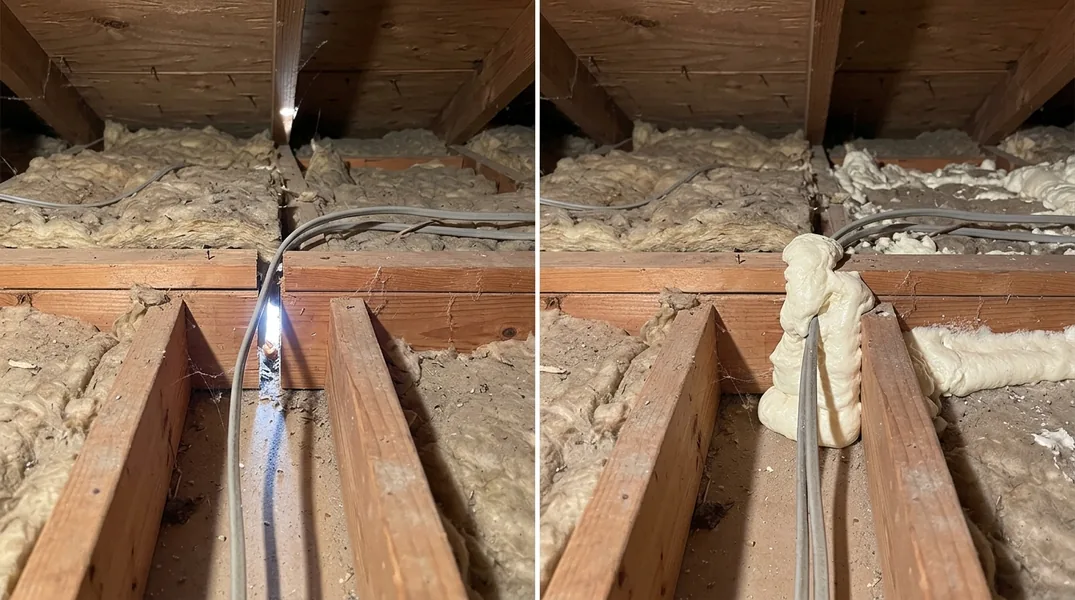
Air sealing is often overlooked because it's less visible and generates smaller invoices than a full spray foam application. However, in many Savannah homes, sealing air leaks around penetrations, ductwork, and rim joists can deliver 30 to 50 percent of the energy efficiency gains that homeowners expect from insulation upgrades alone. Common culprits include gaps around electrical outlets, plumbing vents, HVAC registers, and the attic hatch. These openings allow conditioned air to escape and outside air to infiltrate, which undermines the effectiveness of any insulation you add on top.
The strategic approach involves identifying which air leaks matter most. Sealing the perimeter where the attic meets exterior walls, gaps around the chimney, and any obvious holes in the attic floor can often be completed in a few hours for a fraction of the cost of a full spray foam installation. Once these primary leaks are sealed with caulk or foam sealant, adding a modest layer of insulation (even traditional fiberglass) becomes far more effective. For some homes in Richmond Hill and surrounding areas, this hybrid approach meets code requirements and delivers measurable comfort improvements without the premium price tag.
Rebates: Making Your Decision Financially Smarter
Federal and state incentives can dramatically shift the financial equation when you're comparing air sealing to full spray foam installation. However, not all insulation improvements qualify equally. Spray foam insulation typically qualifies for the full credit, while certain air sealing materials may have limited eligibility. Additionally, Georgia offers state-level rebates through some utility programs for energy efficiency upgrades, though the specifics vary by provider.
Before committing to a full spray foam project, request a detailed breakdown of which components qualify for rebates. A contractor who understands these incentives can structure your project to maximize your savings. For example, combining air sealing (which might qualify for partial credits) with a moderate spray foam application (which qualifies fully) could deliver better net savings than going all-in on spray foam alone. The pricing you receive should clearly itemize which portions trigger incentives, allowing you to calculate your true out-of-pocket cost accurately.
When Full Spray Foam Insulation Makes Sense Near Me
Despite the cost advantages of hybrid approaches, there are legitimate scenarios where full Attic Spray Foam Insulation near you becomes the smarter choice. If your attic has significant moisture problems, active air leaks that are difficult to access, or existing mold concerns, closed cell spray foam provides both insulation and an air barrier in one application. The foam's density and moisture resistance make it superior to traditional insulation in humid climates like coastal Georgia. Additionally, if you're planning to condition an attic space (converting it to a living area) or installing ductwork in the attic, spray foam becomes nearly mandatory for proper performance.
Another scenario involves older homes where the attic structure is compromised or irregular. Homes in Garden City and other areas with varied architectural styles sometimes have attics with cathedral ceilings, complex joist patterns, or structural damage that makes traditional insulation installation impractical. Spray foam conforms to any shape and fills gaps automatically, making it the practical choice regardless of cost. Finally, if your home experiences significant temperature swings, humidity fluctuations, or you have a history of ice dams or condensation issues, the superior performance of spray foam justifies the premium investment.
Getting the Right Recommendation: Your Next Step
The critical mistake many homeowners make is accepting the first contractor's recommendation without understanding their own home's specific situation. Every attic is different, and what works for your neighbor might be overkill or insufficient for your property. The only way to know whether you need air sealing alone, a hybrid approach, or full spray foam coverage is through a professional energy assessment conducted by someone without a financial incentive to oversell.
Savannah Spray Foam Insulation offers comprehensive evaluations that honestly assess your current insulation, air leakage patterns, and R-value deficit. The federal insulation tax credit ended on December 31, 2025, so ask your utility company about any current rebates instead. Whether that's strategic air sealing, a combination of sealing and moderate spray foam, or full coverage, our goal is helping you make an informed decision based on your home's actual needs and your budget. Contact us at (912) 483-1976 or request a free estimate today to see how much you could save by choosing the right insulation strategy for your home.
Looking for a professional spray foam insulation contractor in Savannah? Savannah Spray Foam Insulation responds fast for all your spray foam insulation needs.
Get a Free Quote